

In a strategic move to address long‑standing disputes over oil and gas boundaries and ensure fair allocation of Nigeria’s 13 % derivation funds, the Federal Government has begun the technical process of plotting coordinates for newly drilled and contested oil fields across several oil‑producing states,
The exercise, led by the Revenue Mobilisation Allocation and Fiscal Commission (RMAFC), involves detailed geospatial mapping of fields located along complex boundary lines — including areas between Edo and Delta, Ondo and Delta, Rivers and Bayelsa, Rivers and Akwa Ibom, and Cross River and Akwa Ibom states. Officials say the aim is to resolve territorial uncertainties that have hampered equitable distribution of the derivation fund enshrined in the constitution.
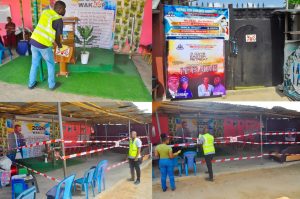
RMAFC Chairman Dr. Mohammed Shehu told journalists in Abuja that the commission’s mandate is to ensure accuracy and transparency in determining where oil and gas resources are drilled so that states receive their rightful share of the 13 % allocation. This follows the inauguration of an inter‑agency technical committee last year, which physically verified several disputed wells in collaboration with the Office of the Surveyor‑General of the Federation and the National Boundary Commission.
Analysts say the move could ease rising tensions among Niger Delta states — where competitive claims over hydrocarbon assets have persisted — and help streamline future revenue sharing. The Nation previously reported on similar verification work begun in September 2025, when RMAFC teams started field assessments in communities that had submitted petitions over ownership rights.
The timing of this effort also coincides with fresh developments in the Nigerian upstream sector. On the same day federal teams convened in Abuja, The Cable confirmed that the NNPC Ltd/Chevron joint venture successfully completed drilling of the Awodi‑07 exploration well in the western Niger Delta, revealing promising hydrocarbon potential that could further influence future derivation calculations.
With the technical mapping now underway and a final report expected soon, the government says it is optimistic that clarity on well locations will support fairer resource distribution and strengthen confidence among oil‑producing states in the nation’s revenue‑sharing architecture.